Copper peptides went from a niche ingredient in a handful of high-end skincare lines to one of the most searched skincare terms of the last two years. TikTok made them famous. Four decades of research made them credible. But somewhere between the lab and your feed, the claims got loud — "reverse wrinkles," "outperform retinol," "repair skin on a cellular level."
So here's the honest version. This guide covers what GHK-Cu copper peptide serum genuinely supports, who it suits, how to use it without wasting product, and the mistakes that quietly cancel out the results you paid for.
That last part matters more than the hype, because most people who try copper peptides and feel underwhelmed didn't use a bad product — they used a good one the wrong way.
What is a copper peptide serum?
A peptide is a short chain of amino acids — think of it as a small message your skin already knows how to read. GHK-Cu is one specific peptide (glycyl-histidyl-lysine) bound to a single copper ion.
It isn't a lab invention dropped onto your face. GHK-Cu occurs naturally in your own body — in plasma, saliva, and other fluids. It was first isolated from human blood plasma in 1973 by biochemist Dr Loren Pickart, who noticed that plasma from younger people seemed to make older tissue behave more youthfully in the lab. The version in skincare is synthetic, but it's an identical match to what your skin recognises.
When people say "copper peptides" in a skincare context, they almost always mean GHK-Cu. It's the most-studied form, and it's the one worth having in your routine.
What GHK-Cu actually does (the no-hype version)
Here's where most articles either oversell or hand-wave. Let's be specific about what the research supports — and where it stops.
GHK-Cu is unusual because it works on several fronts at once, which is why minimalists love it: broad benefit from a single bottle.
Supports the look of firmer skin. GHK-Cu helps signal your skin's natural collagen and elastin processes. In one frequently cited 12-week study, copper peptide cream was measured against two gold-standard anti-ageing ingredients on the same skin. GHK-Cu increased collagen in around 70% of participants, ahead of vitamin C (about 50%) and retinoic acid (about 40%). That's a meaningful result — but note it's one study, on thigh skin, and your mileage will vary.
Helps smooth the appearance of fine lines. With consistent use over 8–12 weeks, evidence supports modest improvements in the look of skin firmness, elasticity, and fine lines. "Modest" is the operative word. This is a steady, compounding ingredient — not an overnight fix.
Calms the look of stressed, irritated-looking skin. GHK-Cu is associated with soothing, evening, and improving overall skin tone and quality of appearance.
Plays well with a minimalist routine. Because it influences a wide range of your skin's own repair and renewal pathways, you get firming, smoothing, and conditioning benefits from one product instead of five.
What it is not: it's not a medicine, it doesn't "heal" or "treat" skin conditions, and it's not a replacement for clinical treatments like prescription retinoids if those are what your skin actually needs. A serum that promises miracles is lying to you. A serum that's honest about being a strong, well-tolerated, evidence-backed anti-ageing active — that's the one worth buying.
Who should use a copper peptide serum?
Copper peptides suit a wider range of people than most actives, largely because they're so well tolerated.
- Anyone starting an anti-ageing routine. GHK-Cu has one of the best safety and tolerability profiles of any peptide studied, making it a gentle entry point.
- People who can't tolerate retinol. Retinoids cause flaking and irritation for a lot of people. Copper peptides offer a smoother, lower-irritation path to similar firming and smoothing goals.
- Sensitive and reactive skin types. Reported side effects are rare and usually mild — occasionally temporary redness that settles quickly.
- People who want fewer products. If you want one active doing real work rather than a ten-step shelf, this is your ingredient.
If your skin is currently broken, actively reacting, or you're managing a diagnosed skin condition, talk to a doctor or dermatologist before adding any new active. That's not a legal line — it's just sensible.
How to use GHK-Cu serum properly
This is the section that decides whether you see results. Get this wrong and even a perfectly formulated serum underdelivers.
1. Apply to clean, dry skin. Cleanse, pat dry, then apply your copper peptide serum before heavier creams or oils. Once or twice daily is the standard.
2. Layer moisturiser on top. Serum first, moisturiser to seal. Sunscreen every morning, always — UV undoes anti-ageing work faster than any serum can build it.
3. Don't use it in the same session as vitamin C. This is the single most common mistake. Vitamin C (ascorbic acid) can react with the copper ion and blunt GHK-Cu's activity. Split them: vitamin C in the morning, copper peptide serum at night. Or alternate days. Just never in the same layer.
4. Give it 8–12 weeks. Peptides are a long game. The collagen and firmness benefits build gradually with consistent use. If you quit at three weeks, you quit before the results were ever going to show.
5. Don't overload your routine. Stacking copper peptides with multiple strong actives (high-strength acids, retinoids, vitamin C) in one routine can cause irritation and ingredient conflicts. Keep it simple and space things out.
Does the dose actually matter? (Yes — and most brands won't tell you.)
Here's something the industry stays quiet about: a serum can list GHK-Cu on the label and still contain barely enough to do anything.
Copper peptides aren't cheap, and the easiest way to protect a margin is to underdose — put a sniff of the active in, print it on the front, and let the ingredient's reputation do the selling. The label looks identical to a properly dosed product. Your skin can tell the difference; the marketing can't.
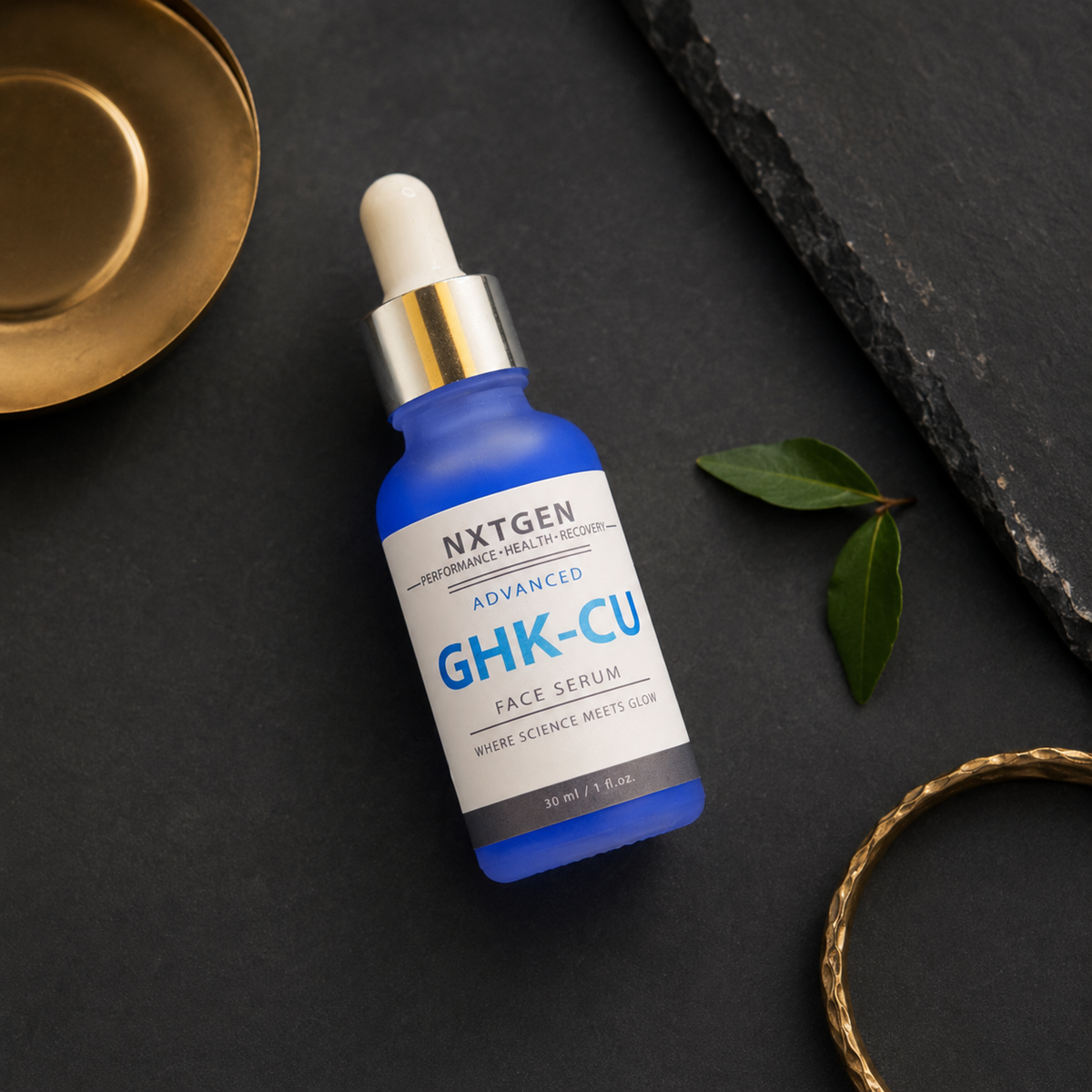
This is exactly why we built NXTGEN on one promise: full doses, real ingredients, no shortcuts. Our GHK-Cu Advanced Peptide Serum is formulated at a genuine active concentration, made in small batches in our own Western Australian lab, and supported with niacinamide and dual-weight hyaluronic acid so the whole formula works — not just the hero name on the front.
You shouldn't have to take that on faith, either. Look for a brand that's specific about its concentrations. Vagueness on the label usually means vagueness in the bottle.
The bottom line
Copper peptide serum isn't hype — but it isn't magic either. GHK-Cu is one of the most researched, best-tolerated anti-ageing actives available, with real evidence behind firmer-looking, smoother-looking skin over time. The results are steady rather than dramatic, and they only show up if the product is properly dosed and you use it consistently for a couple of months.
Buy a real dose. Keep it away from your vitamin C. Give it three months. That's the entire formula for getting copper peptides to actually work.
Ready to try a properly dosed copper peptide serum? Explore the NXTGEN GHK-Cu Advanced Peptide Serum — full-dose GHK-Cu, made in small batches in our WA lab. Shop the serum
This article is general information about skincare ingredients and is not medical advice. Individual results vary. If you have a skin condition or concerns, consult a healthcare professional.
